Saturday, January 28, 2012

Stanek's Weekend Question: Complete this sentence for Planned Parenthood’s new ad campaign: “We’re your…”

Planned Parenthood of Northern New England has a new ad campaign, which completes this sentence in a variety of sexually suggestive ways: “We’re your….” Click all graphics to enlarge…


Check out Jill Stanek's weekend question and complete the sentence about Planned Parenthood. "We're your..."

Pro-life Quote of the Day: Pia de Solenni on the HHS mandate


"The point is that the Catholic Church (that includes the Bishops, the clergy, and the laity) is facing a crisis that is deeply rooted in the failure of catechesis. Without thorough catechesis, people in the Church – whatever their vocation or state in life – lack the conviction and strength to be effective Catholic witnesses. And when the secular media does more...to discuss issues like same-sex marriage, contraception, abortion, et al, than the Church does, well then we’re faced with things like this new HHS mandate, not to mention other even more serious issues."

~ Dr. Pia de Solenni from her post at Catholic Vote, Emily's Right

Fr. Barron comments on St. Thomas Aquinas

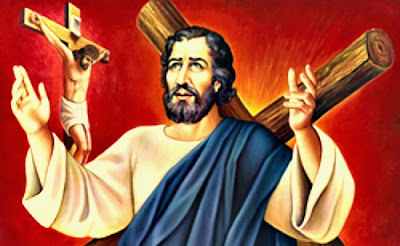
St. Thomas of Aquinas, "Angelic Doctor"

Image Source

Happy Feast of St. Thomas Aquinas! As a graduate student in theology, I pray daily to St. Thomas Aquinas, my dear friend and intercessor, who has helped me through some trying times. Today is his feast day and I plan to celebrate it heartily, but first, let me share a little about him.

Saint Thomas Aquinas was a great medieval theologian and philosopher, who died at the age of 49, leaving behind a body of work that would have taken three normal lifetimes to complete. As a Doctor of the Church, he has been given the title "Angelic Doctor" and is the patron of Catholic universities and schools. His most important work, the Summa Theologiae, an explanation and summary of the entire body of Catholic teaching, has been standard for centuries, even to our own day. St. Thomas, a Dominican priest, reflected the Dominican ideal. He was a true contemplative who shared the fruits of contemplation with others.

Born of a noble family in southern Italy, Thomas was educated by the Benedictines. He was a superior student and surpassed his classmates in learning as well as in the practice of virtue.

When he became old enough to choose his state of life, Thomas renounced the things of this world and chose to enter the Order of St. Dominic in spite of the opposition of his family, who had expected him to become a Benedictine. At the age of seventeen, he joined the Dominicans of Naples. His mother, determined to change this, rushed to Naples to consult with her son, but the Dominicans sent him to Rome, on the way to Paris or Cologne. She then instructed his brothers to capture Thomas and confine him in the fortress of San Giovanni at Rocca Secca. He remained "imprisoned" by family members for a two year period in an attempt to prevent him from assuming the Dominican habit and to force him into renouncing his decision. They even went so far as to tempt him with a prostitute. When the woman entered his room, Thomas chased her out with a piece of burning wood from the fire. Following this event, he prayed to God, asking for purity of mind and body. Two angels appeared to him in a dream, to assure him that his prayers had been answered and that God was giving him the gift of perfect chastity. Thus, he earned the title 'Angelic Doctor.' All of the family's efforts proved to be in vain, as Thomas was given the grace to remain pure and to persevere in his vocation.

Thomas studied in Paris and in Cologne under the great philosopher St Albert the Great. Here he was nicknamed the "dumb ox" because of his silent ways and huge size, but he was actually a brilliant student. At the age of twenty-two, he was appointed to teach in the same city. At the same time, he also began to publish his first works. After four years he was sent to Paris. The saint was then a priest. At the age of thirty-one, he received his doctorate.

Thomas spent the rest of his life studying, praying, teaching, writing, composing hymns, and traveling. During his lifetime, he produced 60 works within less than 50 years.

Thomas made a great synthesis of philosophy and theology. He combined the revelation of scriptures with a "framework" of Aristotle and the notion of participation of Plato. This synthesis is called Thomistic philosophy or "Scholasticism" and has remained the official theology of the Church since the 13th century.

He died on March 7, 1274 and was canonized by Pope John XXII on July 18, 1323 - less than 50 years after his death.

Patron: Academics; against storms; against lightning; apologists; book sellers; Catholic academies; Catholic schools; Catholic universities; chastity; colleges; learning; lightning; pencil makers; philosophers; publishers; scholars; schools; storms; students; theologians; universities; University of Vigo.

Related Posts:

St. Thomas Aquinas: My Favorite Quotes and A Spiritual Meditation

Friday, January 27, 2012

Cardinal Designate Timothy Dolan on the Intolerance of the Obama Adminstration


Cardinal-Designate has written an op-ed in the Wall Street Journal which you will definitely want to read. Here is an excerpt:

On Friday, the administration reaffirmed the mandate, and offered only a one-year delay in enforcement in some cases—as if we might suddenly be more willing to violate our consciences 12 months from now. As a result, all but a few employers will be forced to purchase coverage for contraception, abortion drugs and sterilization services even when they seriously object to them. All who share the cost of health plans that include such services will be forced to pay for them as well. Surely it violates freedom of religion to force religious ministries and citizens to buy health coverage to which they object as a matter of conscience and religious principle.

The rule forces insurance companies to provide these services without a co-pay, suggesting they are "free"—but it is naïve to believe that. There is no free lunch, and you can be sure there's no free abortion, sterilization or contraception. There will be a source of funding: you. Coercing religious ministries and citizens to pay directly for actions that violate their teaching is an unprecedented incursion into freedom of conscience. Organizations fear that this unjust rule will force them to take one horn or the other of an unacceptable dilemma: Stop serving people of all faiths in their ministries—so that they will fall under the narrow exemption—or stop providing health-care coverage to their own employees.

The Catholic Church defends religious liberty, including freedom of conscience, for everyone. The Amish do not carry health insurance. The government respects their principles. Christian Scientists want to heal by prayer alone, and the new health-care reform law respects that. Quakers and others object to killing even in wartime, and the government respects that principle for conscientious objectors. By its decision, the Obama administration has failed to show the same respect for the consciences of Catholics and others who object to treating pregnancy as a disease.

This latest erosion of our first freedom should make all Americans pause. When the government tampers with a freedom so fundamental to the life of our nation, one shudders to think what lies ahead.

Great job, Cardinal Designate Dolan! If the government can respect the right to religious freedom for other religions, they can certainly respect the conscience rights of Catholics! They are violating are our first amendment rights, which they have no right to do. Shame on the Obama administration! This administration is truly un-American and the most intolerant administration we have ever experienced in this country. 

Council of Europe votes against euthanasia


January 27, 2012. (Romereports.com) For the first time in decades, euthanasia has been directly rejected by the Parliamentary Assembly of the Council of Europe.

In a resolution, it says “euthanasia, in the sense of the intentional killing by act or omission of a dependent human being for his or her alleged benefit, must always be prohibited.”

Even though some European countries allow euthanasia, this resolution shows that as a whole Europe opposes it. It also highlights that intentional killing, should not be allowed.

The resolution states that when people are faced with an ill family member, one should always opt for “pro-life” and the prolongation of life.

The Council of Europe is based in Strasbourg, France. It includes 47 European countries. Its objectives are the protection of human rights, rule of law, promoting culture and consolidating democratic stability.

Belgium and Holland for example legally allow euthanasia. But this, resolution sends a clear message that as a whole Europe supports the extension of life.

Even though the resolution is not legally binding, supporters say it's a symbolic gesture that shows Europe supports life.

Cardinal Wuerl asks for views of Catholics not to be marginalized in public debate


January 27, 2012. (Romereports.com) Cardinal Donald Wuerl of Washington is following up on the pope's call to fight secularism. Cardinal Wuerl says that it has spread to many different industries in the US.

“It used to be that across our country the voices of all were respected. Now there is this emphasis particularly in the entertainment media, in the information industry to make everything a secular gray. And to say that there can only be one voice, determining public policy, public life, the direction of the community, the common good, and that that voice must be secular,” said the cardinal.

On January 20th, the White House also announced that religious non-profit organizations such as hospitals and universities will have to include birth control as part of their health care, but gave them one year to comply.

Religious groups are saying their rights are not being respected. Cardinal Wuerl is hoping the New Evangelization can help to create a revival of Christian values. He has also been appointed as a “relator”, or the chief coordinator, for this year's synod on the New Evagelization. He says the key to this can be found in Catholic education.

Cardinal Donald Wuerl
Archbishop of Washington (USA)
“We in our country and I think this is true probably across a great part of the Western world, we've suffered from under-catechsesis and so we have a generation, two generations that really does not know the faith.”

Cardinal Wuerl is also the author of “Seek first the Kingdom,” in which he encourages Catholics to challenge many of the status quos of today's culture. He also notes that leading this movement are laypeople.

Cardinal Donald Wuerl
Archbishop of Washington (USA)
“It became very clear to me that many many people have taken the position that the Church, bishops, priests, are the ones that have the responsibility of preaching the gospel and transforming the world. Priests and bishops have the task of preaching the Gospel, laymen and laywomen have the task of transforming the world.”

In promoting the New Evangelization, Cardinal Wuerl has said he is focusing on three elements. The first being a deepening of Catholic education, secondly being comfortable in it, and most importantly sharing it.

St. Angela Merici


Today is the optional memorial of St. Angela Merici, the foundress of the Ursulines. Angela was born on March 21, 1474 at Desenzano, Lake Garda, Italy and died on January 27, 1540 in Brescia.

Angela’s parents died when she was only ten years old. Together, with her older sister, she moved to the nearby town of Salo, to live with her uncle. When her sister died quite suddenly without receiving the last sacraments, Angela was deeply upset. At the age of 15, she became a Franciscan tertiary and greatly increased her prayers and sacrifices for the repose of her sister's soul. She asked God to reveal to her the condition of her deceased sister and He answered her prayer by showing her through a vision that her sister was in Heaven.

When her uncle died, she returned to live at Desenzano to make a life for herself. She was convinced of the need for women to be educated in their faith and converted her home into a school where she daily gathered all the girls of Desenzano and taught them the basics of Christianity. It was at this time that she received a vision, which led her to found a religious order who were to devote their lives to the spiritual education of young women. The school she established at Desenzano was so successful that she was invited to the nearby city of Brescia, to establish a school there, which she accepted.

During a pilgrimage to Holy Land, while visiting Crete, Angela was struck blind. This did not interrupt her trip, however, but she continued on the journey, visiting the shrines with as much devotion and enthusiasm as if she still had her sight. On the way home, while praying before a crucifix, her sight was miraculously restored at the same place where it had been lost.

In 1525, Pope Clement VII, who had heard of her great holiness and her success as a religious teacher of young girls, invited her to remain in Rome; however, Angela returned to Brescia to live a quiet life, away from the limelight.

In 1535, Angela selected twelve women and laid the foundation of the order of the Ursulines in a small house near the Church of St. Afra in Brescia. She died only five years later. St. Angela's body is incorrupt. She was beatified in 1768 by Pope Clement XIII and canonized in 1807 by Pope Pius VII.

Patronage: She is the patron saint of physically challenged people, sick people, and of those who have lost their parents.

Quotes From St. Angela Merci:

"Disorder in society is the result of disorder in the family."

"We must give alms. Charity wins souls and draws them to virtue."

"Mothers of children, even if they have a thousand, carry each and every one fixed in their hearts, and because of the strength of their love they do not forget any of them. In fact, it seems that the more children they have the more their love and care for each one is increased."


St. Angela Merici -- A Prayer of Remembrance

Angela, a valiant woman, inspire us today to be people of faith,
people of action, people in love with God and all creation.
May we be makers of peace in a wounded world.
May we be creators of justice in a broken world.
May we be passionate and compassionate in a indifferent world.
You who traveled the road before us, be with us as you promised.
May the example of your pilgrim heart encourage us on our journey.
Amen.

~ Author Unknown

Thursday, January 26, 2012

Leticia Velasquez - A Special Mother is Born

Leticia discusses her experiences as the mother of a special needs child, which are described in her new book A Special Mother is Born.

Ten Tips for Successful Catholic Blogging


Joe Heschmeyer at Shameless Popery has written a post with some great tips for successful blogging for those just starting out, as well as for more experienced bloggers. Posts like this are helpful to all bloggers -- as we strive to develop new ways to improve our blogging skills to maintain the interest of our current readership and to attract new readers. Reaching out to others to spread the good news is my ultimate goal and that of most of many Catholics bloggers I know.

To learn more about Catholic blogging, read the many helpful of posts at The Church and the New Media.

More Tips:

Six Blogging Tips for Boomers.

5 Things Every Catholic Should Know About How Search Engines Work

March For Life 2012 - Highlights from EWTN's exclusive coverage

Sts. Timothy and Titus


Memorial of Sts. Timothy and Titus

St. Paul was so influential and attractive a personality that he was able to draw such different types of men as Timothy and Titus and to make them his collaborators. Timothy and Titus were converted to Christianity by St Paul, and became his companions and helpers. They were were two of the most beloved and trusted disciples of St. Paul, whom they accompanied in many of his journeys.

Paul made both men bishops and entrusted Timothy with the care of the Christians in Ephesus, and sent Titus to Crete to look after the Christians there. He wrote them “pastoral” epistles, giving advice for pastors and people alike.

Timothy was St. Paul's confidant. St. Timothy has been regarded by some as the "angel of the church of Ephesus", Rev 2:1-17.

Titus was the negotiator, the one St. Paul sent to clear up misunderstandings, reconcile differences, and the one who would organize a new Church. He received a letter from St. Paul which encouraged Christians to live temperate, just, and devout lives, while awaiting the coming of Christ.

St. Timothy was stoned to death thirty years after St. Paul's martyrdom for having denounced the worship of the goddess Diana. Tradition tells us that St. Titus died a natural death at the age of 94, having lived in the state of virginity during his whole life.

Patronage: St. Timothy is the patron saint of intestinal disorders and stomach diseases. St. Titus is the patron of Crete.

Collect: God our Father, you gave your saints Timothy and Titus the courage and wisdom of the apostles: may their prayers help us to live holy lives and lead us to heaven, our true home. Grant this through our Lord Jesus Christ, your Son, who lives and reigns with you and the Holy Spirit, one God, for ever and ever. Amen.

Wednesday, January 25, 2012

March for Life 2012: Christendom Leads the Way

I'm sure my Spiritual Father, a graduate of Christendom, will be happy to see this one!


On January 23, the entire student body of Christendom College, including members of the faculty and staff, led hundreds of thousands in protesting abortion at the 39th Annual March for Life in Washington, D.C. Select students were given the honor of carrying the lead March for Life banner as well as the official March for Life flags.

March For Life 2012 -- The Rebellion

Benedict XVI dedicates General Audience to prayer of Jesus at Last Supper


January 25, 2012. (Romereports.com) During the general audience, following his series of reflections on prayer, the Pope reflected on the prayer of Jesus before the Passion.

In it he says “Jesus, priest and victim, prays that the Father will glorify him in this, the hour of his sacrifice of reconciliation” for the sins of all men.


CATECHESIS FULL TEXT

Dear Brothers and Sisters,

In our continuing catechesis on Christian prayer, we now turn to the priestly prayer which Jesus offered at the Last Supper (cf. Jn 17:1-26). Against the backdrop of the Jewish feast of expiation Yom Kippur, Jesus, priest and victim, prays that the Father will glorify him in this, the hour of his sacrifice of reconciliation. He asks the Father to consecrate his disciples, setting them apart and sending them forth to continue his mission in the world.

Christ also implores the gift of unity for all those who will believe in him through the preaching of the apostles. His priestly prayer can thus be seen as instituting the Church, the community of the disciples who, through faith in him, are made one and share in his saving mission. In meditating upon the Lord’s priestly prayer, let us ask the Father for the grace to grow in our baptismal consecration and to open our own prayers to the needs of our neighbours and the whole world. Let us also pray, as we have just done in the Week of Prayer for Christian Unity, for the gift of the visible unity of all Christ’s followers, so that the world may believe in the Son and in the Father who sent him.

I offer a warm welcome to the students of the Bossey Graduate School of Ecumenical Studies in Switzerland, and I offer prayerful good wishes for their work. Upon all the English-speaking pilgrims and visitors present at today’s Audience I cordially invoke God’s blessings of joy and peace!

Eduardo Verastegui recorded a song dedicated to Benedict XVI


January 25, 2012. (Romereports.com) The actor and film producer Eduardo Verastegui has recorded a new song for the pope's upcoming visit to Mexico. In March, Benedict XVI will make his first visit to the country. While the official agenda for the visit was being confirmed, the star of the film “Bella” wanted to do something to welcome the pope.

Verastegui was part of the group Kairo that also released a solo album. In the past, he's performed with singers like Alejandro Sanz, Shakira and Gloria Estefan at the taping of “The Last Goodbye,” an emotional song dedicated to the victims of the September 11th attacks.

Not much is known about the melody of the song dedicated to Benedict XVI. But it's planned to be released in a few weeks and will probably become one of the most popular song in Latin music this March.

The Feast of the Conversion of St. Paul and My Own Conversion


Today the Church celebrates the Feast of the Conversion of St. Paul, which gives us occasion to reflect on our own faith journey and our own conversion experiences. How do we relate to Paul’s conversion story?

Paul was the most ferocious enemy of the Church, who as a zealous Jew and Pharisee was persecuting Christians during the first century. Paul rooted out Christians in the synagogues, taking them into Jerusalem in chains to have them persecuted. In fact, he even assisted in the stoning of St. Stephen, the first martyr. Then, suddenly, without warning, as he is traveling on the road to Damascus, he hears the voice of God speaking to Him, is blinded by a bright light, and is knocked off his horse. While Paul was an intellectual, a learned Rabbi, a great theologian, his conversion experience was hardly an intellectual one. He was not converted by reason, by an acceptance of Christian ideas, nor was he swayed over by Christian apologetics, but his was a deeply spiritual experience.

As I reflect on my own conversion, it was hardly an intellectual experience, but a mysterious work of God. It was 1987. Both my mother and younger sister had been diagnosed with breast cancer that year. My parents were living in Texas and I was living in IL. I was working as a School Psychologist at a special education cooperative there and went to visit my parents on my Easter break. I had left the Church fifteen years earlier and had now joined my parents for the Good Friday liturgy at their parish.

We were affectionately greeted by their deacon and a nun in full habit, who seemed so joyful and loving toward us. This impressed me, as I wasn't used to seeing people greet one another this way in my daily environment. Usually, people were pleased or relieved to see me and immediately began sharing their problems or concerns with me and it was my job to solve them. My dad (who had emphysema and bursitis, and later, lung cancer) insisted on pushing my mom's wheelchair into church. During the liturgy, we watched a dramatic depiction of the Passion, which was re-enacted on the altar with what appeared to be professional actors (members of the parish) that was heart-wrenching. I felt Christ's pain and His deep love for me. I felt so unworthy and so guilty for my sins -- something I had not felt in a long time.

Of course, I had been raised Catholic and taught to say my prayers at the age of three. I had attended daily Mass when I was a student at my Catholic parochial school. I also made daily visitations to the Blessed Sacrament after school. I regularly attended the annual vocation days held at McCormick Place in Chicago for junior high students considering a religious vocation and had a strong desire to become a nun, like my aunt and my cousin and the teaching nuns I admired so much. By the time I was a senior in high school, I began to have other ambitions. Although I was very active in my Catholic faith, I began to wonder what it would be like to live in the world and experience life like I thought other people (who, unlike my family, had money) did. Our family life revolved around school and church-related activities -- our Catholic faith was our life. Still, I was curious about things outside of our small community and yearned for something more. In my freshmen year, I had traveled to the New York World's Fair and seen the Rockettes at Radio City Music Hall. I wondered what it would be like to live there or in Chicago. I wanted to be free and to experience life -- it was time for my metamorphosis.

This metamorphosis began my freshman year in college, which wasn't far from "the Windy City". I lived in an apartment only a few blocks from school with an older roommate -- a working girl who loved to party. My life seemed to take a bit of a downhill turn from there. I began to have an inordinate attachment to worldly goods, money, status, and spending time in engaging pleasurable pursuits to satisfy my ego. I had lost my sense of sin.

When I became well-established in my career, I would meet people who told me "You are so lucky. You have it all!" But I certainly didn't feel like I had it all -- there was an inner yearning for something more -- something I couldn't define -- but desperately needed. My life was empty.

On that Good Friday, I watched my dad fall to his knees and embrace the life-size cross, tenderly kissing the feet of Jesus. Then, my mom seemed to "fly" out of her wheel chair and, in an instant, was on her knees, too, embracing and reverently kissing the corpus. It was at that moment, that I knew where the void was in my life. Jesus had been missing.

This was the turning point in my life – the decisive moment when I knew I would return to my faith. It made me realize how much I loved Jesus and how much I missed Him and yearned to receive Him in the Eucharist. When I did return to my faith, like St. Paul, I felt compelled to reach out to others in love and to share the gospel message with as many people as I could. It has only been through my acceptance of the free graces of God that I have been given and continue to receive daily that my ongoing conversion continues.

All conversions are the result of a personal encounter with Jesus Christ. And, yes, they also involve an intellectual component – the acceptance of a creed and the doctrine of faith. However, it is only when our hearts are transformed by the love of Christ that we are able to follow after Him.

In the words of Pope Benedict XVI:

"Turning now to ourselves, let us ask what this means for us. It means that for us too Christianity is not a new philosophy or a new morality. We are only Christians if we encounter Christ. Of course, he does not show himself to us in this overwhelming, luminous way, as he did to Paul to make him the Apostle to all peoples. But we too can encounter Christ in reading Sacred Scripture, in prayer, in the liturgical life of the Church. We can touch Christ's Heart and feel him touching ours. Only in this personal relationship with Christ, only in this encounter with the Risen One do we truly become Christians. And in this way our reason opens, all Christ's wisdom opens, as do all the riches of truth. Therefore let us pray the Lord to illumine us, to grant us an encounter with his presence in our world, and thus to grant us a lively faith, an open heart and great love for all, which is capable of renewing the world." (Wednesday Audience, September 3, 2008)

~ copyright January 2012, Jean M. Heimann

Prayer to St. Paul the Apostle

Tuesday, January 24, 2012

Pope calls journalists to reflect on the power of silence... and Twitter


January 24, 2012. (Romereports.com) The pope has called for journalists to learn the capacity of listening and reflection for the annual World Day of Communication. The Vatican's Council of Social Communication presented his message called “Silence and Word: Path of Evangelization.” It says that as much, if not more, could be said with silence instead of the spoken word.

The president of the Vatican's department of communications believes this message is a reflection of the pope's personality and his outlook on being human.


Msgr. Claudio Maria Celli
President, Pontifical Council for Social Communications
“I think that it's not only his personal characteristics but probably his knowledge, his thinking, his reflection about the human being is helping us to rediscover what it means to give an authentic deep sense, human sense to my communication.”

The pope's message also says that communication has largely moved to search engines and social networks on the web. It notes that questions and answers are frequently posted online, but to focus on important issues, one should also consider silence.

Angelo Scelzo
Under-Secretary, Pontifical Council for Social Communications
“The Church introduces silence as a moment of reflection, as a compliment to the word. With silence, the word is more heavy, more profound and more meaningful, when it has grown from the reflection point of silence. Silence is a form of high communication.”

The pope also mentioned the power of technology. He says that attention should be given to various websites and social networks that promote authentic questioning and reflection.

He also talked about the power of Twitter style comments, saying in short phrases, often no longer than a verse from the Bible, profound thoughts can be communicated.”

Our Lady of Fatima on Fox News


Go here to learn more about the documentary.

Pro-life Quote of the Day: Bishop Robert Vasa


“Any government leader, particularly those who claim to be Christian, who claims to be pro-choice, is unworthy of public office.”

~ Bishop Robert Vasa, Santa Rosa, California at a pro-life rally marking the 39th anniversary of the Supreme Court’s Roe v. Wade decision

The March for Life 2012 Photos You Probably Haven't Seen


OSV posts a number of them here. Check out the slideshow at Mommy Life.  You'll find even more here.  Crescat has some personal photos posted here.

U.S. Bishops vow to fight against contraception mandate


January 24, 2012. (Romereports.com) The U.S Conference of Catholic Bishops says religious freedom is facing a serious threat in America.

At the center of it all, is a health care mandate that would require employers and insurance companies to offer contraception, sterilization and abortion inducing drugs.


Msgr. Timothy Dolan
U.S Conference of Catholic Bishops, President
“It's requiring almost all Americans, even those with ethical or religious objections to pay for this coverage.”

In this video, produced by the Conference of Catholic Bishops, Dolan says the mandate does have an exemption, but it's limited. In essence, he says, the health care plan violates religious freedom, virtually ignoring the rights of those who oppose it.

Msgr. Timothy Dolan
U.S Conference of Catholic Bishops, President
“The administration offered a very narrow religious exemption to some employers such as Churches, but the government will still require almost all Americans to pay for this coverage, even if it violates their consciences. That is a foul ball, by any standard.”

Even though churches are exempt, church related institutions, like schools, hospitals and charitable organizations are not. The mandate had been under review, but most recently, the Health and Human Services Department announced that all employers must comply by August 1, 2012. Church related institutions though, have a year longer, until August 1, 2013.

Some believe the year extension is more of a political move, to try and avoid high tensions during an election year.

In fact, just a day before the announcement, Benedict XVI met with a group of American Bishops during their ad limina visit at the Vatican. There, the pope said he was concerned over seemingly growing hostility against Christianity in the U.S

Benedict XVI
January 19, 2012
“When a culture attempts to suppress the dimension of ultimate mystery, and to close the doors to transcendent truth, it inevitably becomes impoverished and falls prey.”

Dolan says American Bishops will fight against this mandate. He's also urging all Catholics to join them.


Related: 7 Things You Can Do to Fight the Contraception Mandate

Best Messages from Pro-life Leaders at March for Life 2012


"Mr. President, the violent destruction of children in the womb—killing babies—is not an American value.


Mr. President, Americans by an overwhelming majority oppose abortion on demand and value the lives of women and unborn children.


Mr. President, stop imposing abortion policies on American institutions and religious organizations. 


America values religious freedom.


Mr. President, abortion is not, never was, and never will be an American value.


Stop forcing abortion on America and the world!"

~ Congressman Chris Smith (R-NJ)

Read his full speech.

Listen to all of the messages here:

Walk for Life West Coast 2012 Photos


This was taken at the Walk for Life - West Coast in San Francisco on Saturday, January 21. Check out the rest at Sr. Lisa-Marie's Nun blog, Nunspeak.

St. Francis de Sales, Mentor and Model


St. Francis de Sales (1567-1622), a Swiss theologian and the patron saint of writers has long been my mentor and model, and one of my most powerful intercessors. As a graduate student in theology and as a freelance writer, I look to him for guidance and for assistance in my studies and my writing. His unique methods of evangelization have also greatly inspired me.

At the age of thirteen, Francis studied theology at the University of Paris and immediately afterword earned a doctorate in law. However, he felt called to the priesthood and was ordained and during the time of the Protestant Reformation. The Catholic Church at this time was losing many of its parishioners to the new churches of the Protestant Reformation and Francis set out to restore Catholicism to the area around Lake Geneva known as Chablais.

For three years, he trudged through the countryside, his feet frozen and bleeding, as he trampled through the snow. No one would listen to him, so he wrote out his sermons, copying them by hand in the form of leaflets, and placed them under doors. It is said that he converted 40,000 people by the time he left to return home. As Bishop of Geneva, his words of inspiration and wise counsel led many people to live out the gospel message in their lives. He founded the Order of the Visitation with St. Jane Francis de Chantal, a good friend, with whom he shared his spiritual beliefs. He remained active throughout his life, using his talent for writing to assist him in ministering to others. St. Francis de Sales is a Doctor of the Church and patron of the Catholic press.

Here are some of my favorite quotes from St. Francis de Sales:

“The highest degree of meekness consists in seeing, serving, honoring, and treating amiably, on occasion, those who are not to our taste, and who show themselves unfriendly, ungrateful, and troublesome to us.”

"Keep your heart very wide to receive in it all sorts of crosses and resignations or abnegations, for the love of Him who has received so many of them for us."

"Faithfully attend to your obligations, but know that you have no greater obligation than that of your salvation and of the saving progress of your soul on the way to true devotion."

“Do not lose your inner peace for anything whatsoever, not even if your whole world seems upset. If you find that you have wandered away from the shelter of God, lead your heart back to Him quietly and simply.”

"How beautiful it is to behold a person destitute of all attachment, ready for any act of virtue or charity, gentle to all, indifferent as to any employment, serene in consolations and tribulations, and wholly content if only the will of God is done!"

~ copyright January 2012, Jean M. Heimann

Monday, January 23, 2012

7 Things You Can Do to Fight the Contraception Mandate


Here are some great suggestions from Truth and Charity:

1.  Pray! We all intend to pray for an end to abortion, contraception, and any other practices which defile human life, but how often do you offer a rosary or divine mercy chaplet specifically for those issues? Do you fast? Try skipping one meal per week. Heck, try giving up every snack or even just butter on your roll or gravy on your potatoes. Even the smallest sacrifice for our Lord can do wondrous things.

2.  Call your Congressmen! Congress holds the purse strings of the Federal Government, and empirical data suggests that Congress doesn’t generally act unless the public expresses outrage. (Follow this link and use the directory at the top right of the page to find your Congressman’s info.)

3.  Take courage! Christ instituted the Church in a time when many were hostile to outside religions. Christ himself was crucified, and countless followers were martyred for their belief in his teaching. Their martyrdom did not diminish the faith, but propagated it and inspired others to live their faith with courage.

4.  Pray for our clergy! The shepherds of the Church need our prayers to have the fortitude to preach the Gospel and give strength to their sheep during this time of persecution.

5.  Engage the social media! Show the Catholic bishops of the United States that you support them! Join the Facebook page we have dedicated to the cause: Stand with the US Bishops against HHS.

6.  Show your support visually! If you are a blogger or webmaster, support the bishops by posting a badge on your site! We have a variety to choose from, and you can see how each would look on the background color of your site by using the Badge Selection Tool.

7.  Finally, take heart that even though our life on this earth can seem long, it is as Mother Teresa described, “In light of heaven, the worst suffering on earth, a life full of the most atrocious tortures on earth, will be seen to be no more serious than one night in an inconvenient hotel.”

Read the story here.

Related Posts:

Cardinal-designate Timothy Dolan speaks out against HHS mandate on Contraception

Obama Administration Decides to Force Religious Institutions to Cover Contraception

Documentary remembers Archbishop Fulton Sheen as great evangelist


January 23, 2012. (Romereports.com) He's been called “The John the Baptist of our times,” Archbishop Fulton Sheen is remembered by many as the greatest evangelist in the history of the United States. When television was still in its infancy, Archbishop Sheen hosted his own show called “Life is Worth Living,” that would reach 30 million viewers per week.

His cause for beatification and canonization was opened in 2002 in Peoria, Illinois, where Archbishop Sheen was originally ordained as a priest in 1919. In December, the investigation tribunal into an alleged miracle was closed and sent to the Vatican for review.

Also, now available is the documentary “Servant of All,” which tells Sheen's story and shows the testaments from many who were close to him or affected by his life.

Msgr. Daniel R. Jenky
Bishop of Peoria, Illinois
“He really was one of the most important evangelists in the history of the United States. He may have more souls to his record than anybody else in our nation.”

Regis Philbin
TV personality
“I thought he made tremendous impact on everybody, but especially in the Catholic family, who frankly never had someone like this talking to them every week on something like this which they never had either!”

The DVD of the documentary can now be ordered online. While his cause for beatification remains under review, the diocese of Peoria awaits to hear the outcome.

Thousands of Young People attend March for Life Activities

28,000 Catholic Young People fill the Verizon Center in Washington DC each year for a rally and Mass prior to the Prolife March. This year an additional 10,000 also filled the Armory.


Read To March for Life is to Experience Life by Msgr. Charles Pope.

Pro-life Quote of the Day: Archbishop Chaput


“Abortion kills a child, it wounds a precious part of a woman’s own dignity and identity, and it steals hope. That’s why it’s wrong. That’s why it needs to end. That’s why we march.”

~ Archbishop Charles J. Chaput speaking at Georgetown University on Jan. 22, 2012.

National Day of Prayer and Penance for Life

St. Ildephonsus


Today's saint of the day is St. Ildephonsus.

St. Ildephonsus was the Archbishop of Toledo, and died 23 January, 667. He was born of a distinguished family and was the nephew of St. Eugenius, his predecessor in the See of Toledo. At an early age, despite the determined opposition of his father, he embraced the monastic life in the monastery of Agli, near Toledo. He was ordained a deacon, around the year 630. He was called by King Reccesvinth, near the end of 657 to fill the archiepiscopal throne of Toledo, where he governed the Church of Toledo for just over nine years and was buried in the Basilica of Saint Leocadia.

Ildephonsus had a strong devotion to the Blessd Mother, and it is said that one day he was praying before the relics of Saint Leocadia, when the martyr arose from her tomb and thanked the saint for the devotion he showed towards the Mother of God. It was also related that on another occasion the Blessed Virgin appeared to him in person and presented him with a priestly vestment, to reward him for his zeal in honoring her.

The literary work of Ildephonsus is more widely known than the details of his life, and merits for him a distinguished place in the role of Spanish writers.

Saturday, January 21, 2012

St. Agnes of Rome, virgin and martyr


St. Agnes was born in Rome during the beginning of the third century. She was brought up as a Christian and grew to be a very beautiful young woman. By the age of twelve, Agnes was already receiving suitors for her hand in marriage. And already by the age of twelve, Agnes had developed a deep spirituality that directed her to devote her life to God as a consecrated virgin.

Several of the suitors who Agnes turned away became bitter at her and turned her in to the authorities as a Christian. The political atmosphere at the time was very charged, and the Diocletian persecution was well under way. Agnes was arrested and thrown into a house of prostitution to await her death. All who came to look lustfully upon Agnes lost their sight, but many had their sight restored by her intercessory prayers. At last Agnes was sentenced to death. Her body was taken away and buried in a catacomb that later came to bear her name.

Under the reign of the Emperor Constantine, a basilica was built in her honor near her tomb. For centuries, two lambs have been brought to the church and blessed every year. The lambs are then reared in a cloister. When they have grown into sheep, their wool is used to make 'palliums' which are special stoles the Pope sends to archbishops to wear on their shoulders as symbols of the sheep carried by the Good Shepherd.

St. Agnes, whose name means both purity and lamb is the patron of Christian virtue confronted by political and social violence and her life was commented on by many of her contemporaries.

Pope Damasus adorned her tomb with with sacred poetry and many of the the Fathers of the Church, following St. Ambrose, have honored her in their writings.

"This is a virgin's birthday; let us follow the example of her chastity. It is a martyr's birthday; let us offer sacrifices; it is the birthday of holy Agnes: let men be filled with wonder, little ones with hope, married woman with awe, and the unmarried with emulation. It seems to me that this child, holy beyond her years and courageous beyond human nature, received the name of Agnes (Greek: pure) not as an earthly designation but as a revelation from God of what she was to be."

~ St. Augustine

"Today is the birthday of a virgin; let us imitate her purity. It is the birthday of a martyr; let us offer ourselves in sacrifice. It is the birthday of Saint Agnes, who is said to have suffered martyrdom at the age of twelve."
~ St. Ambrose


Image Source